
Decoralot is reader-supported. When you buy through links on our site, we may earn a commission at no cost to you - and it never influences our picks. See how we choose.
The best living rooms aren't the most expensive ones, they're the most considered. The difference between a room that looks furnished and one that looks designed comes down to a collection of small, repeatable moves that designers use again and again. Here are 51 of them in printable format that you can download and print for free. Better yet, make sure to save this article for future reference. Each one of these ideas is steal-able on its own, and most of them free to do, or nearly so.
Work through them in order for a full transformation, or cherry-pick the ones your room needs most. For the buying decisions behind the ideas, our Living Room hub has the guides.
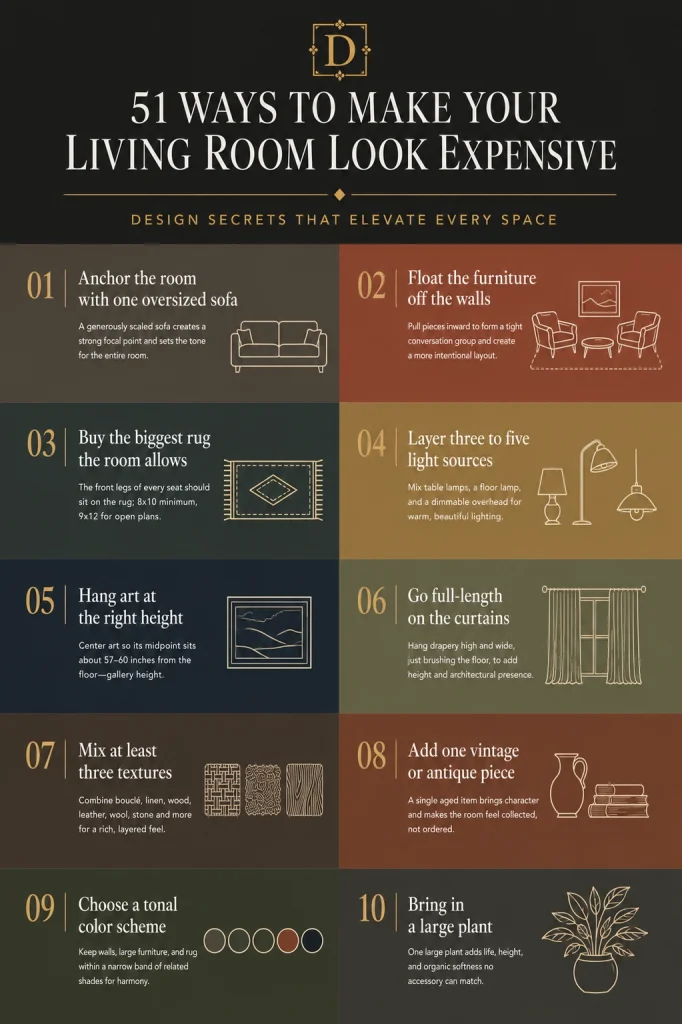
1. Anchor the room with one oversized sofa
Start every living room with the largest piece: a generously scaled sofa. A single substantial sofa reads more luxurious than two small loveseats, and it gives the room a confident center of gravity to build around.
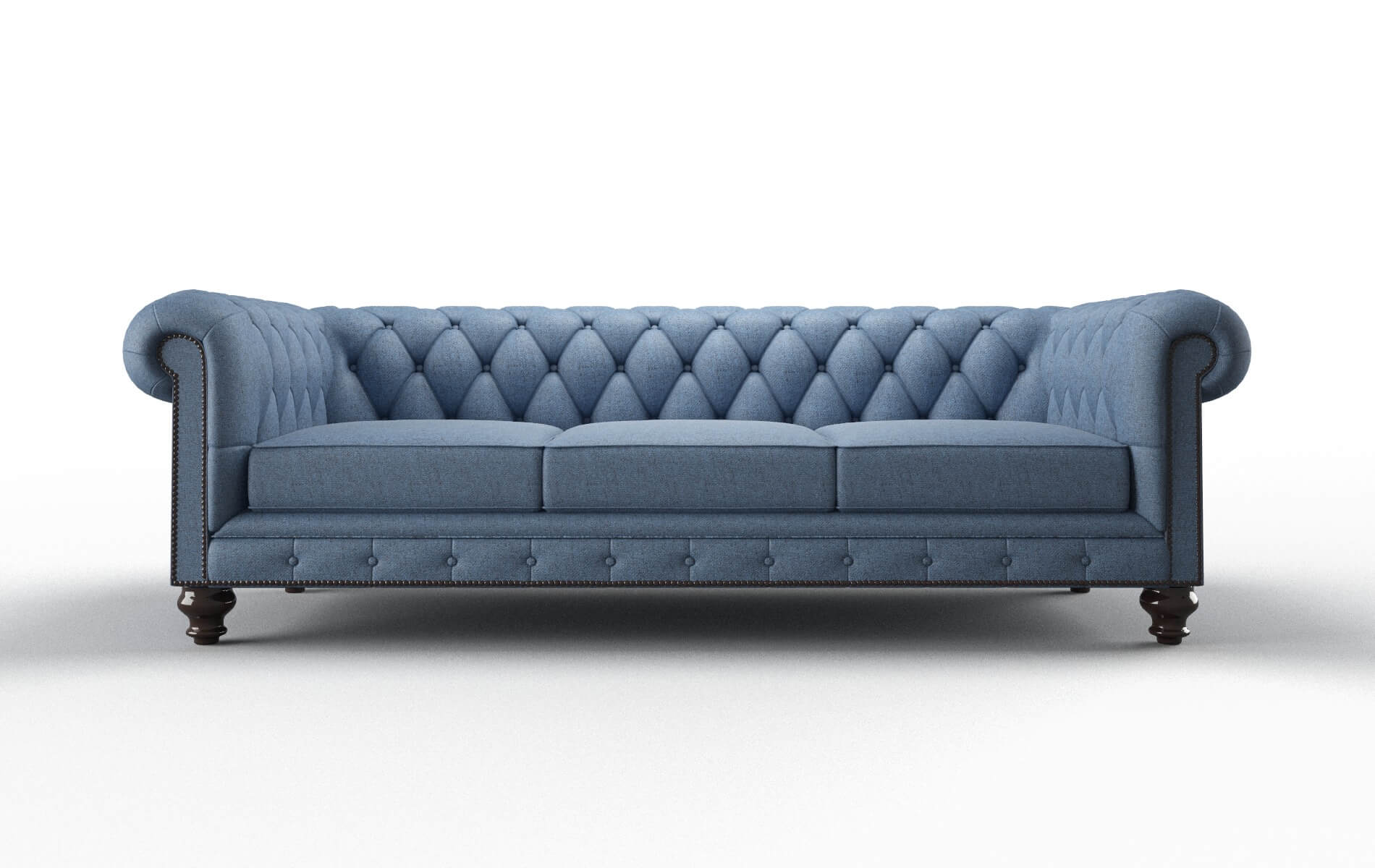
DreamSofa
Bordeaux Merino HRP Ocean Sofa
As stunning as an antique, this graceful masterpiece brings a sense of grandeur to any room. It's clean lines, and gently sensual curves are designed in the spirit of the timeless Chesterfield style. This tufted beauty is sure to become…
Shop DreamSofa →2. Float the furniture off the walls
Pushing every piece against the walls is the most common builder-grade instinct, and the easiest to fix. Pulling the sofa and chairs inward to form a tight conversation group instantly makes a room feel intentional and intimate.
3. Buy the biggest rug the room allows
An undersized rug shrinks a room and reads cheap. The front legs of every seat should sit on the rug; in most living rooms that means 8x10 minimum, 9x12 for open plans.

Kalaty
Jardin Rug
Materials: cotton chenille. Finishes: lori-loom weave. Dimensions (in): 2' x 3' 2'6" x 10' 3'6" x 5'6" 5'6" x 8'6" 7'6" x 9'6" 8'6" x 11'6" 9'6" x 13'
Shop Jennifer Furniture →4. Layer three to five light sources
Overhead light alone flattens a room. Add table lamps, a floor lamp, and a warm overhead on a dimmer for the gathered, golden glow that makes everyone look better.
5. Hang art at the right height
Center artwork so its midpoint sits about 57–60 inches from the floor at gallery height. Art hung too high is the silent tell in otherwise lovely rooms.
6. Go full-length on the curtains
Hang drapery wide and high, just brushing the floor. Short, skimpy curtains shrink windows; full-length panels add architecture to any room.

LuxDrape
Florence Linen Blend Drapes Grommet - Forest Green
SPECIFICATIONS Heavyweight Fabric Width 112 inches Bottom Hem 1.5 inches. Shapelock Supported Sold Individually Per panel…
Shop LuxDrape →7. Mix at least three textures
Bouclé, linen, wood, leather, wool, stone. Combining textures within a calm palette is what makes a neutral room feel rich instead of flat.
8. Add one vintage or antique piece
A single aged object — a worn leather chair, an antique mirror, a vintage rug — inoculates a room against the showroom look and signals it was collected, not ordered.
9. Choose a tonal color scheme
Keep walls, large furniture, and rug within a narrow band of related shades. Tonal harmony reads expensive; high contrast fragments the room.
10. Bring in a large plant
One generous fiddle-leaf fig, olive tree, or bird-of-paradise adds life, height, and a hit of organic softness no accessory can match.
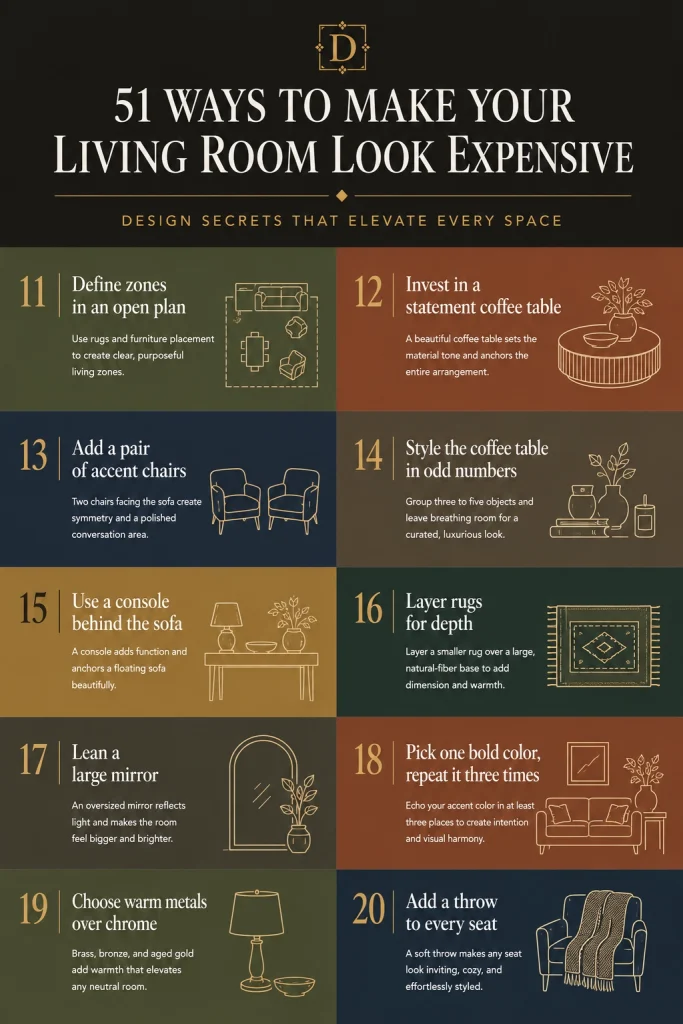
11. Define zones in an open plan
In a large or open-concept space, use the rug and furniture placement to carve out a clear living zone, so it reads as a designed room rather than leftover floor.
12. Invest in a statement coffee table
As the room's center, the coffee table sets the material tone. A marble, travertine, or beautiful wood table anchors the whole arrangement.
13. Add a pair of accent chairs
Two chairs facing the sofa create instant symmetry and a proper conversation grouping — far more polished than a single mismatched extra seat.
Sponsored
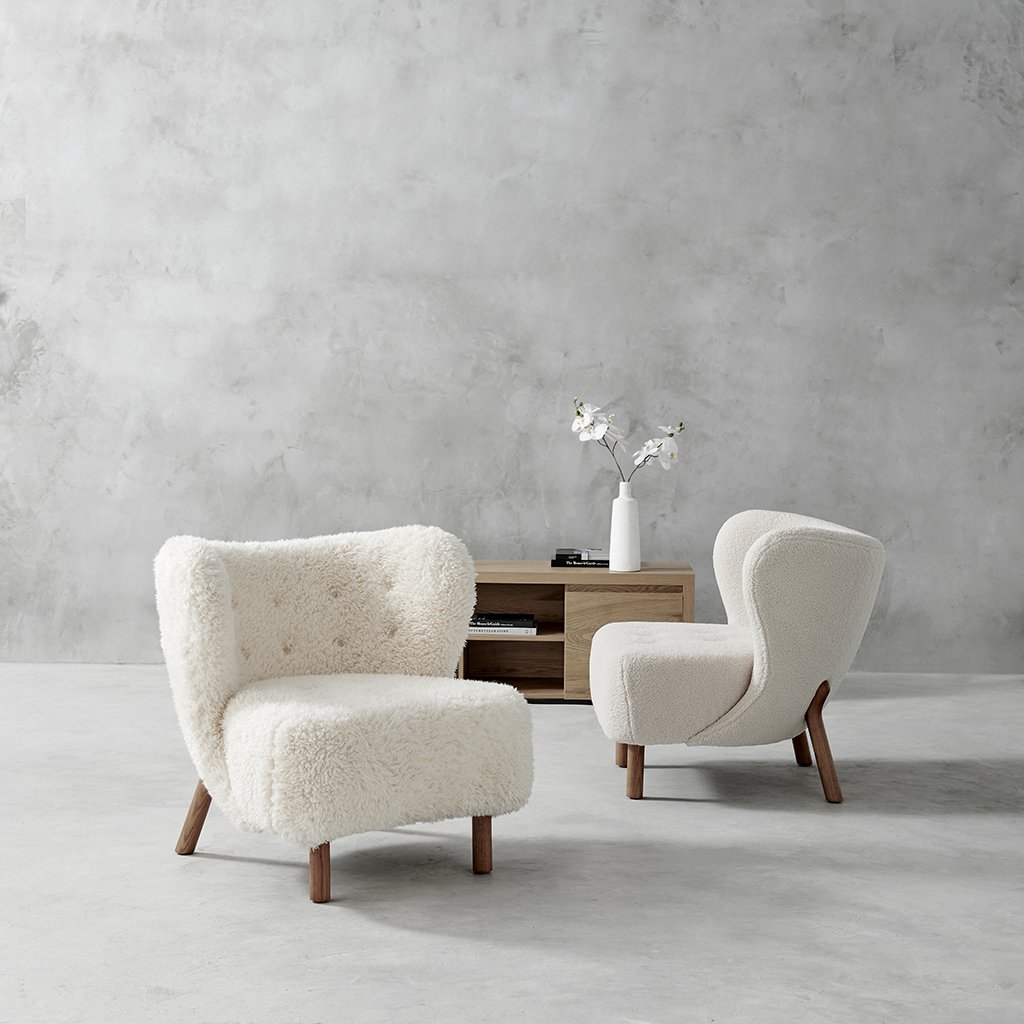
Little Sherpa Lounge Chair Sheepskin-Long Hair / Solid Oak
Designed by Viggo Boesen back in 1938. Viggo Boesen was trained as an architect, and in the 1930's he was one of the architects, who introduced the new villa type in "Funkis-style" which was popular with a wider audience. Viggo…
Shop Eternity Modern →14. Style the coffee table in odd numbers
Group three to five objects — books, a sculptural piece, a candle, stems — and leave breathing room. The edited surface is the luxury signal.
15. Use a console behind the sofa
A floating sofa gains purpose with a console behind it: a landing spot for lamps and objects that also visually anchors the seating in the room.
16. Layer rugs for depth
A smaller vintage or wool rug over a large natural-fiber base adds dimension and warmth — a designer move that costs little.
17. Lean a large mirror
An oversized floor mirror doubles the light and the sense of space, and reads as a confident, gallery-like choice.

Sponsored
Tafla Contemporary Full Length Polished Stainless Steel Framed Metallic Mirror / Polished Chrome
This stunning Tafla Contemporary Full Length Polished Stainless Steel Framed Metallic Mirror elevates an everyday piece of functional decor to sculptural art. The mirror is characterized by a distinctively unique frame in polished stainless steel and show
Shop Eternity Modern →18. Pick one bold color, repeat it three times
Choose a single accent color and echo it in at least three places at different scales like a pillow, art, and decorative object so it reads as intention, not accident.
19. Choose warm metals over chrome
Brass, bronze, and aged gold add warmth that chrome and nickel can't. A few warm-metal accents lift an entire neutral room.
20. Add a throw to every seat
A beautiful wool or cashmere throw over the sofa arm or chair back makes a room look lived-in, inviting, and instantly cozier.
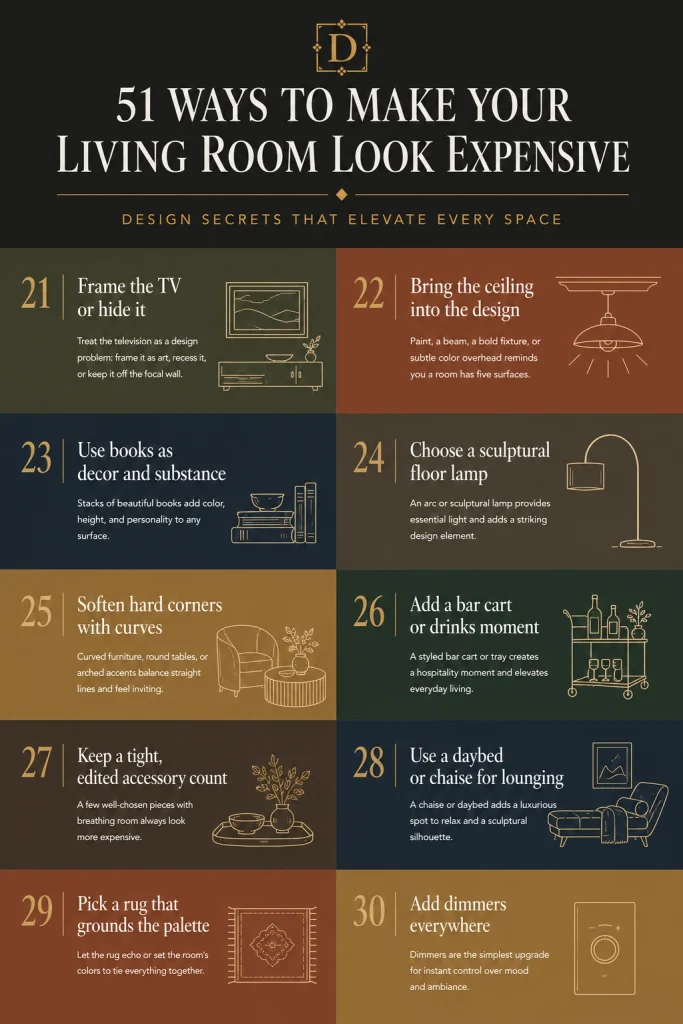
21. Frame the TV or hide it
Treat the television as a design problem: frame it as art, recess it, or keep it off the focal wall. A bare black screen undermines an otherwise considered room.
22. Bring the ceiling into the design
Paint, a beam, a bold light fixture, or even a subtle color shift overhead reminds you a room has five surfaces, not four.
23. Use books as decor and substance
Stacks of beautiful hardcovers add color, height, and personality to shelves and tables — and signal a room that's actually lived in.
24. Choose a sculptural floor lamp
An arc or sculptural floor lamp does double duty: essential mid-height light and a piece of standing sculpture for an empty corner.

Sponsored
Malayan Collection Two Light Floor Lamp Natural
The fluted stem of the Malayan Floor Lamp is made of wood in its natural color for an elemental feel. The tall, thin eggshell linen shade We've placed atop it makes the wood lamp all the more commanding. In…
Shop Lighting Design →25. Soften hard corners with curves
A curved sofa, round coffee table, or arched mirror balances a room full of straight lines and feels current and inviting.
26. Add a bar cart or drinks moment
A styled bar cart or tray turns a corner into a hospitality moment and quietly signals a home set up for gathering.
27. Keep a tight, edited accessory count
Resist over-accessorizing. A few well-chosen objects with space around them always read more expensive than many crowded ones.
28. Use a daybed or chaise for lounging
Where space allows, a chaise or daybed adds a luxurious lounging option and a sculptural silhouette the sofa alone can't provide.

Sponsored
Jan Ekselius Etcetera Lounge Chair & Ottoman Performance Felt-Light Grey
The Jan Ekselius Etcetera Easy Chair is a bold embodiment of minimalist elegance and ergonomic innovation. Its clean lines and distinctive form provide not only a striking visual presence in any modern interior but also a more comfortable than ever…
Shop Eternity Modern →29. Pick a rug that grounds the palette
Let the rug set or echo the room's colors. A rug fighting the palette is a common, costly misstep; one that grounds it ties everything together.
30. Add dimmers everywhere
Putting every light on a dimmer is the cheapest luxury upgrade in the home — instant control over mood, from bright-functional to warm-evening.
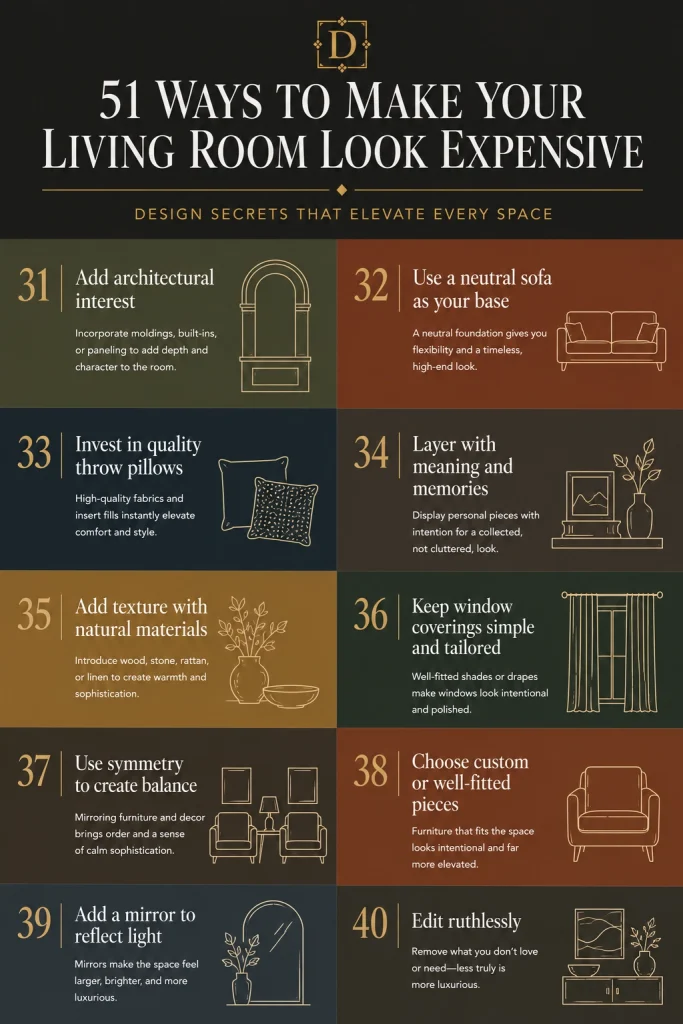
31. Create a reading nook
A chair, a floor lamp, a side table, and a throw in a quiet corner add function and a sense of considered, layered living.
32. Use oversized art instead of many small frames
One large canvas scaled to the sofa wall reads as conviction; a scatter of small frames reads as hesitation.
33. Repeat the room's wood tone
Keeping wood tones within a consistent family — across floor, tables, and frames — creates cohesion; wildly mismatched woods read accidental.
34. Add a sheepskin or hide layer
A sheepskin over a chair or a hide layered on the rug adds organic texture and a hit of softness that elevates a simple seat.
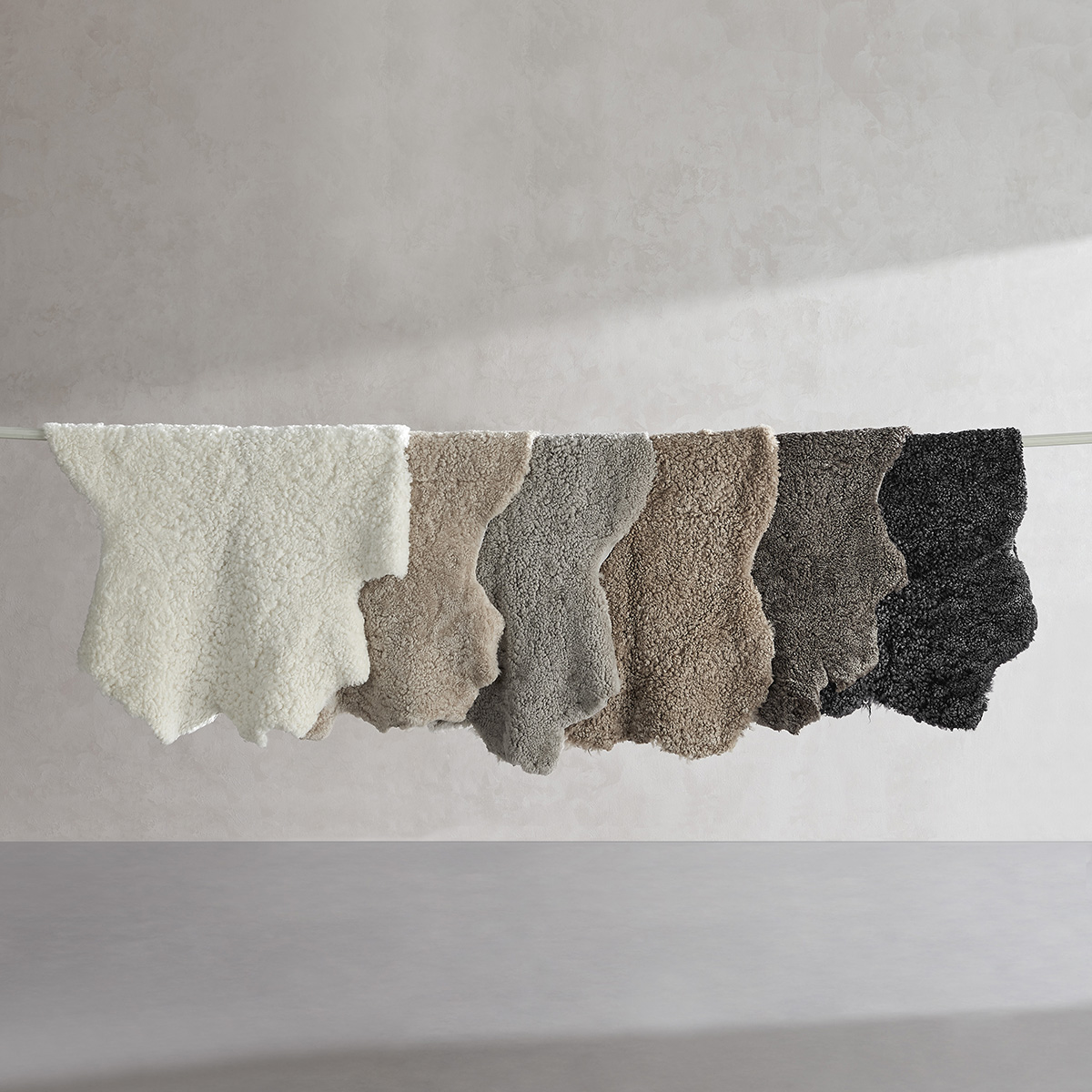
Sponsored
Edenwool Genuine Sheepskin Throw-Whisper White
Elevate your furniture with the luxurious touch of Edenwool real sheepskin, expertly crafted for superior furniture upholstery and versatile enough for various furnishing projects. The wool's enticingly curly texture and high density ensure a perfect blen
Shop Eternity Modern →35. Style shelves with the rule of thirds
Mix books, objects, and negative space across shelves in varied groupings, leaving gaps. Packed shelves read cluttered; edited ones read curated.
36. Choose performance fabrics for real life
Performance weaves let pale, luxurious-looking upholstery survive kids, pets, and wine — luxury that's also livable.
37. Add a pouf or ottoman for flexibility
A leather or upholstered ottoman serves as extra seating, a footrest, or a tray surface — flexible function with a soft, sculptural form.

Sponsored
Flemming Lassen The Tired Man Lounge Chair & Footstool in Genuine Sheepskin-Almond Beige
The iconic overstuffed easy chair is likened to a big bear hug. The Flemming Lassen The Tired Man Sheepskin Lounge Chair & Footstool is “as warm and safe as a polar bear cub in the arms of its mother in…
Shop Eternity Modern →38. Let one wall go dark
A single deep-charcoal, forest, or navy wall adds drama and depth, and makes art, brass, and pale furniture glow against it.
39. Use symmetry for a calm, formal feel
Matched lamps, paired chairs, and balanced art create the serene, ordered feeling that reads as quiet luxury.
40. Bring in natural light, then control it
Maximize daylight with sheer layers, then add room-darkening panels for control. Light, well-managed, is the most flattering thing in any room.
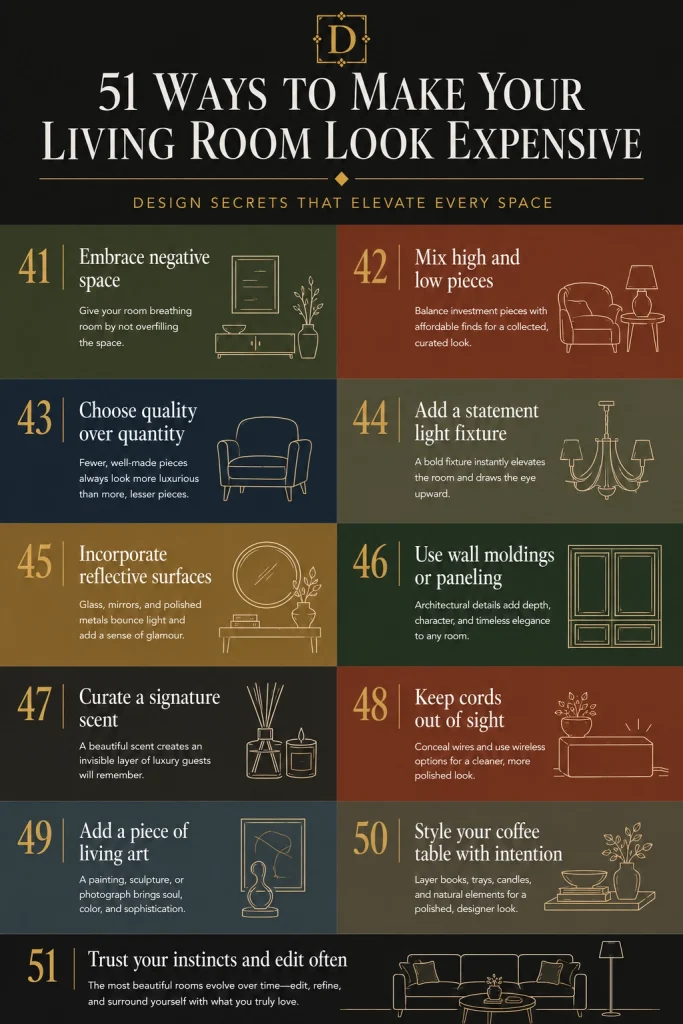
41. Add a textured ceiling fixture
A woven, plaster, or sculptural ceiling fixture turns required lighting into a design moment overhead.

Sponsored
Easton Four Light Flush Mount Rubbed Brass
A superb mix of old and new follows modern industrial and farmhouse aesthetics, building a focal point through lighting and a warm, gleaming finish. The Easton collection offers a four-light flush mount ceiling light with linear elements and an orderly…
Shop Lighting Design →42. Choose a sofa color you won't tire of
For the room's biggest investment, a timeless neutral — oatmeal, greige, deep green, camel — outlasts trend colors and anchors years of restyling.
43. Layer pillows in varied sizes
Mix pillow sizes and textures (a large square, a lumbar, a smaller accent) in the palette for a sofa that looks designed, not default.
44. Add a sculptural object or two
A single sculptural object — a ceramic vessel, a stone form, an art piece — gives the eye a considered place to land.
45. Use a runner or path for flow
In long or open rooms, let furniture and rugs guide a natural walking path, so the space feels planned rather than navigated around.
46. Echo the outdoors
Bring in seasonal branches, a bowl of fruit, or fresh stems. Living, changing natural elements keep a room from feeling static.
47. Invest in one designer piece
A single piece with genuine design pedigree — a chair, a light, a table — lifts everything around it and gives the room a focal point with a story.
48. Keep traffic paths clear
Leave at least a comfortable walking width between pieces. A beautiful room you have to squeeze through never feels luxurious.
49. Add warmth with a textile on the wall
A flat-woven rug, tapestry, or large fiber piece adds softness and sound-dampening warmth that framed art can't.
50. Finish with scent and sound
The final, invisible layer: a quality candle or diffuser and a considered playlist complete the sensory experience of a truly welcoming room.
51. Edit, then edit again
The last and hardest step: remove one thing. Negative space is what lets the good pieces register — the most luxurious rooms know exactly what to leave out.
Bringing It All Together
You don't need all fifty-one at once. Start with the foundational moves - the oversized sofa, the right-sized rug, layered lighting, and full-length curtains - and let the rest accumulate over time. That collected-over-seasons approach is exactly what produces the layered, expensive, lived-in look these ideas are chasing. When you're ready to buy, start with the best luxury sofas and the best high-end area rugs, and let the right palette tie it together.
Frequently Asked Questions
How can I make my living room look more expensive?
The highest-impact moves are free or cheap: float the furniture off the walls into a conversation group, hang curtains full-length, layer warm lamp light instead of relying on overhead, keep a tight tonal palette, and edit your surfaces. Then invest where it shows most - the sofa and the rug.
What is the most important piece in a living room?
The sofa, followed by the rug. They're the largest, most-used, and most-visible elements, so quality and scale show most there - and getting both right makes everything else in the room look better.
What are the most common living room mistakes?
An undersized rug, furniture pushed flat against the walls, art hung too high, skimpy curtains, and over-accessorized surfaces. Each is easy to fix, and fixing them transforms a room more than buying anything new.
How do I make a living room feel cozy and luxurious at once?
Layer textures (bouclé, wool, linen, leather), keep lighting warm and low through multiple sources, add throws and pillows in the palette, and include one or two natural and one or two vintage elements. Warmth comes from texture, light, and signs of life - not from spending more.
Related Guides
Best Luxury Sofas · Best High-End Area Rugs · Quiet Luxury Living Room Ideas · Colors That Make a Room Look Expensive · Living Room Hub