
Decoralot is reader-supported. When you buy through links on our site, we may earn a commission at no cost to you — and it never influences our picks. See how we choose.
Table of Contents
The coffee table is the heart of the living room. It's the surface everyone gathers around, props their feet near (or on!), and notices first when they walk in. It's also the easiest place to make a room look pulled-together or, just as easily, cluttered and aimless. Designers style coffee tables with a simple, repeatable system that turns a flat surface into a layered focal point, and in 2026 the look has shifted toward what designers call the "collected" table: lived-in, personal, layered with meaning rather than perfectly staged. Here's the formula, plus how to adapt it to the current mood.
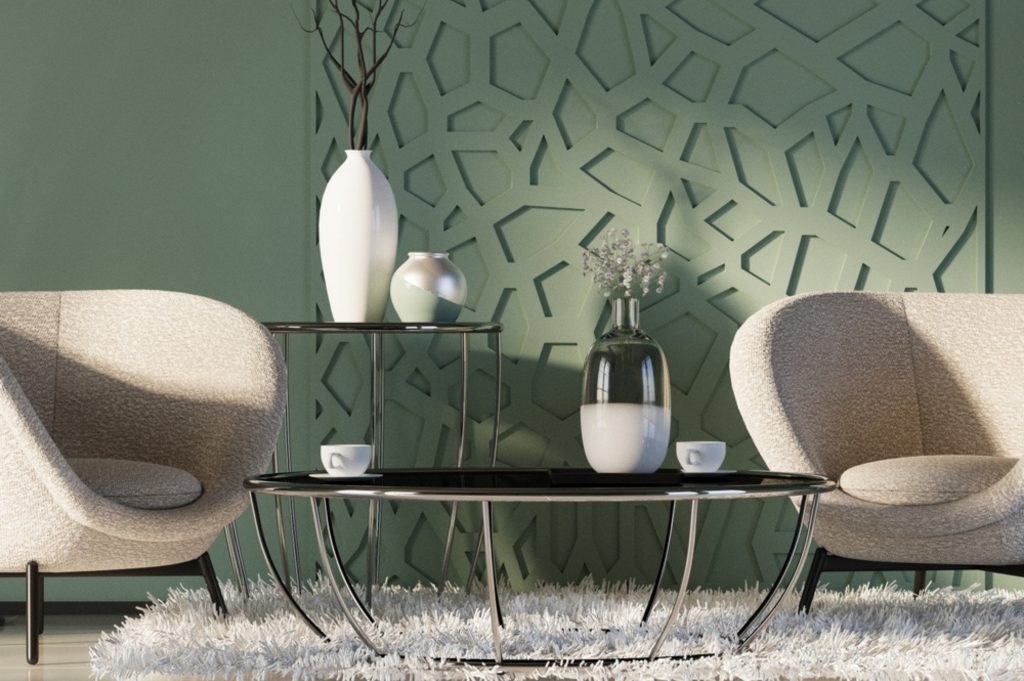
The Designer Formula, in Brief
Almost every well-styled coffee table is built from four ingredients arranged in groupings: a tray to anchor and corral, a stack of books for height and personality, a sculptural object for interest, and something living such as flowers or greenery, for a bit f life. Arrange these in odd-numbered clusters, vary the heights, mix the textures, and leave breathing room. Master that and you can style any table in minutes. Everything below is refinement.
Step 1: Start With a Tray
The tray is the foundation, and the single move that instantly makes a table look intentional. It defines a zone, corrals smaller objects so they read as a deliberate grouping rather than scattered clutter, and protects the surface. Choose one roughly a third the size of the table, in a material that contrasts the table. Materials that make for excellent coffee table trays include a marble or brass tray on wood, or the opposite - a wood or woven tray on glass or stone. Everything else builds in and around it.
Step 2: Add Books for Height and Personality
Stack two to four coffee-table books to create a low platform and inject personality. Books are the workhorse of coffee-table styling: they add height for layering objects on top, introduce color through their spines and covers, and say something about the people who live there. Lay them flat in a stack rather than standing them up, and use the top book as a pedestal for a smaller object or a candle.
Step 3: Layer in Objects and a Candle
On and around the books and tray, add a sculptural object or two like a bowl, a piece of pottery, a small sculpture, a geode or stone. Also, add a candle or two for warmth and scent. This is where the table gets its character. Vary the shapes (something round, something angular, something organic) and the finishes (matte, glossy, textured), and arrange so your eye travels across different heights. Think of it as a small still life.
Step 4: Finish With Something Living, Then Edit
Add life last: a low vase of fresh flowers, a bud vase with a single stem, a small plant, or a bowl of natural elements. Greenery keeps the arrangement from feeling static and ties it to the room. Then edit; step back and remove anything that crowds the composition or blocks the view across the table. Negative space matters as much as the objects. A coffee table you can still set a cup of coffee on is a coffee table styled correctly.
Minimal vs. Collected: The 2026 Question
Two approaches are current, and both are right depending on your room. The minimal table which would contain a few books, a candle, coasters, and flowers, lets the table itself be the star and suits clean, modern, and quiet-luxury rooms. The collected table, the look gaining ground in 2026, styles the surface almost like a bookshelf. This means lots of layers, lots of personality, stacks of books, candles, small objects, and pieces you've gathered over time. The key to the collected look is that it reads as gathered, not staged. Use meaningful trinkets, framed photos, and travel finds rather than a generic showroom vignette. Choose minimal for calm or collected for warmth and storytelling.
Adapting Coffee Table Design to Your Table Shape
Let the table dictate the layout:
- On a rectangular table, divide the surface into two or three zones and style each lightly, or run one long tray down the center.
- On a round table, build a single central grouping with a tray and radiate objects outward.
- On a square table, anchor one quadrant with the tray-and-books stack and balance it diagonally with a vase or object.
- On an ottoman, always use a sturdy tray since it provides the firm surface the soft top lacks and keeps everything stable.
Frequently Asked Questions
What do you put on a coffee table?
The reliable formula is a tray to anchor, a stack of two to four books for height, a sculptural object or two, a candle, and something living like flowers or a small plant. Arrange in odd-numbered groupings, vary the heights and textures, and leave open space. You don't need all of it at once — three or four elements is plenty.
How do I make my coffee table look more expensive?
Start with a tray (it instantly looks intentional), stack quality design books, add one sculptural object with real presence, and finish with fresh flowers. Vary heights, keep a tight color story, and edit out clutter. Restraint and a few good pieces always read more expensive than many cheap ones.
Should a coffee table be minimal or full?
Both work in 2026. Minimal styling — a few books, a candle, flowers — suits clean and modern rooms and lets the table shine. The "collected" look, layered like a bookshelf with personal objects, suits warmer, more lived-in rooms. The key either way is that it looks intentional, not cluttered.
How do you style a coffee table on an ottoman?
Always use a large, sturdy tray as the base — it gives you the firm, level surface a soft ottoman lacks and keeps books and objects stable. Build your grouping on the tray, and keep it compact so the ottoman remains usable.
A well-styled coffee table anchors the whole living room. Pair the technique with the right pieces — see the best coffee tables, the best coffee-table books, and the living room hub for more.